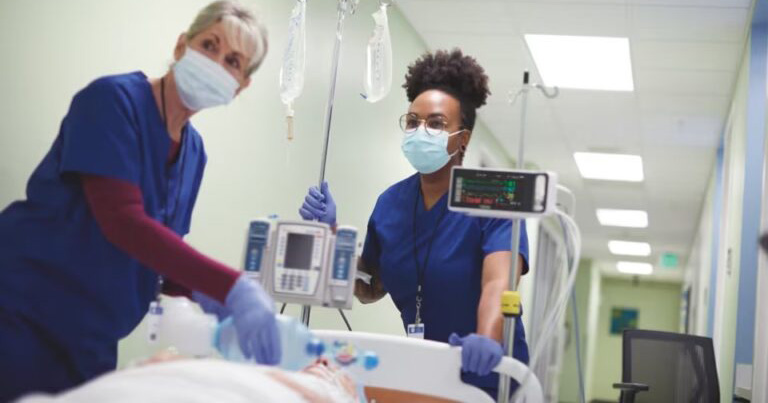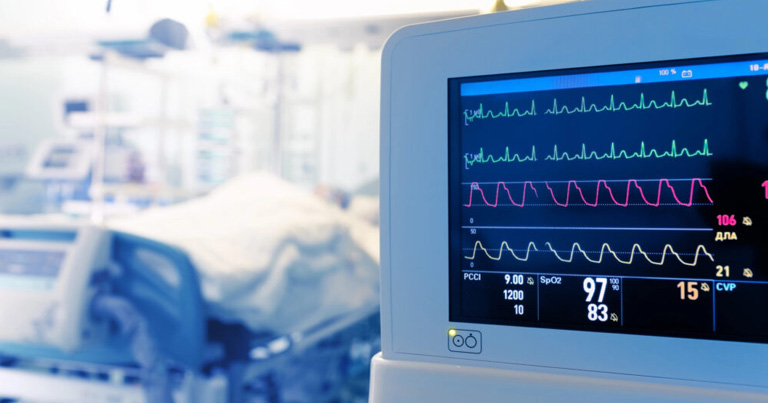
What is ICU?
If you or a loved one have ever been hospitalized, you may have heard the term “ICU” thrown around. But what exactly is an ICU? Here you wil…
Grades aneurysmal subarachnoid hemorrhage with two clinical scales (Hunt and Hess, WFNS) and one CT scale (modified Fisher), side by side.
Hunt and Hess
WFNS
Modified Fisher (first CT)
| Scale | Grades | What it describes |
|---|---|---|
| Hunt and Hess | I-V | Clinical condition on presentation; IV-V is high grade |
| WFNS | I-V | Consciousness (GCS) and focal deficit; IV-V is high grade |
| Modified Fisher | 0-4 | Blood on the first CT; higher grades carried more symptomatic vasospasm |
The 2023 AHA/ASA guideline recommends a clinical scale such as Hunt and Hess or WFNS to set initial severity and predict outcome, and notes that most studies call grades 4-5 high grade. A high grade alone does not settle treatment: the guideline finds aneurysm treatment reasonable in high-grade patients after a careful discussion of prognosis with the family (in one series of 98 treated patients with Hunt and Hess 4-5, 40% had a favorable outcome at 12 months), and not beneficial only when the injury is irreversible after modifiable causes have been corrected.
| Grade | Clinical picture |
|---|---|
| I | No symptoms, or mild headache and slight neck stiffness |
| II | Moderate to severe headache, neck stiffness, no deficit other than a cranial nerve palsy |
| III | Drowsy or confused, or a mild focal deficit |
| IV | Stupor, moderate to severe hemiparesis |
| V | Coma, decerebrate posturing |
Hunt and Hess wording follows the NINDS common data element definition of the scale, which cites the 1968 paper.
| Grade | GCS | Major focal deficit |
|---|---|---|
| I | 15 | Absent |
| II | 13-14 | Absent |
| III | 13-14 | Present |
| IV | 7-12 | Present or absent |
| V | 3-6 | Present or absent |
The WFNS committee used the GCS for consciousness and a major focal deficit (hemiparesis or aphasia) as the only other factor, to separate grades II and III. The table gives no grade for a GCS of 15 with a deficit.
| Grade | First CT | Symptomatic vasospasm, crude odds ratio (95% CI) against grades 0-1 |
|---|---|---|
| 0 | No SAH or IVH | Reference |
| 1 | Thin SAH (under 1 mm), no IVH | Reference |
| 2 | Thin SAH with IVH | 1.6 (1.0-2.5) |
| 3 | Thick SAH (over 1 mm), no IVH | 1.6 (1.1-2.2) |
| 4 | Thick SAH with IVH | 2.2 (1.6-3.1) |
Grade wording and the 1 mm thickness split follow the NINDS common data element definitions of the scale.
Hunt and Hess introduced their grades in 1968 in a study of surgical risk and the timing of aneurysm repair. The WFNS committee built its scale on an international cooperative study of 3,521 patients, in which level of consciousness predicted death and disability and hemiparesis or aphasia predicted disability in survivors. The modified Fisher scale was tested in 1,355 patients from the placebo arms of four tirilazad trials, 33% of whom developed symptomatic vasospasm; it remained a predictor after adjustment for other risk factors (adjusted odds ratio 1.28, 95% CI 1.06-1.54), while the original Fisher scale did not.
If you or a loved one have ever been hospitalized, you may have heard the term “ICU” thrown around. But what exactly is an ICU? Here you wil…
You just received a call from the hospital that your loved one is admitted to ICU. This sounds scary. You already know what is ICU, but you…