What is ICU?
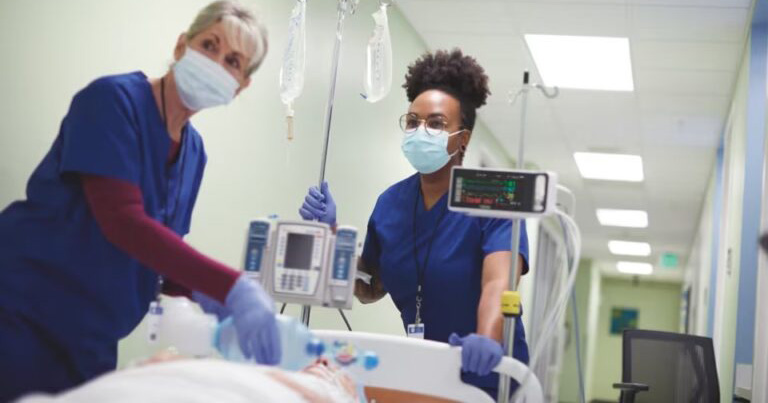
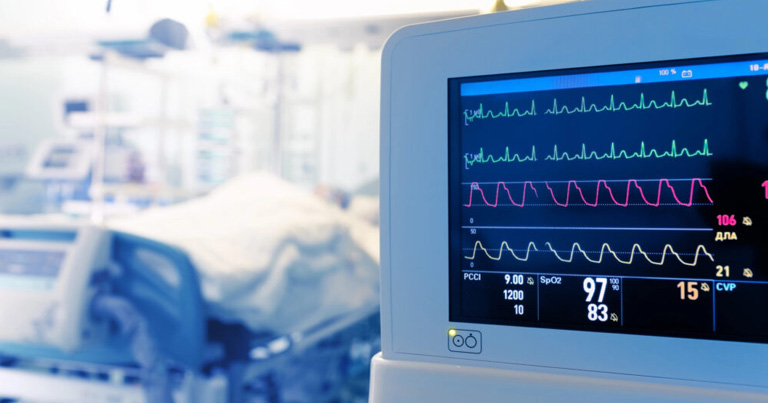
If you or a loved one have ever been hospitalized, you may have heard the term “ICU” thrown around. But what exactly is an ICU? Here you wil…
Rates level of consciousness from eye opening, verbal response and best motor response, and adds pupil reactivity for the GCS-Pupils (GCS-P) score.
Report the three components, for example E3 V4 M6; the total runs from 3 to 15. The scale’s authors recommend describing an individual patient by the components and keeping the total for comparing groups.
When a component cannot be tested, record it as NT (not testable), never as 1, and do not report a total: it would be falsely low. Common reasons are eyes closed by swelling, an endotracheal tube or tracheostomy, and paralysis. Where drugs are the cause, the official guidance is to reverse sedation and paralysis briefly if possible (a wake-up test).
| Pupils unreactive to light | Pupil reactivity score |
|---|---|
| Neither (both react) | 0 |
| One | 1 |
| Both | 2 |
GCS-P = GCS total − pupil reactivity score (range 1-15)
In 15,900 patients with traumatic brain injury, mortality was 51% at a GCS of 3 and 74% at a GCS-P of 1, and outcomes worsened smoothly across the whole GCS-P range.
Neither the GCS nor the GCS-P should drive prognosis or care on its own: the scale’s authors advise predicting outcome only together with other variables in a multivariable model, and the GCS-P is not meant to replace assessing and reporting each component.
| Component | Rating | What counts | Score |
|---|---|---|---|
| Eye opening | Spontaneous | Open before any stimulus | 4 |
| To sound | After a spoken or shouted request | 3 | |
| To pressure | After fingertip pressure | 2 | |
| None | No opening, nothing interfering | 1 | |
| Not testable | Closed by a local factor, such as swelling | NT | |
| Verbal response | Oriented | Gives name, place and date correctly | 5 |
| Confused | Not oriented, but coherent | 4 | |
| Words | Intelligible single words | 3 | |
| Sounds | Only moans or groans | 2 | |
| None | No sound, nothing interfering | 1 | |
| Not testable | Something prevents speech, such as a tube | NT | |
| Best motor response | Obeys commands | Follows a two-part request | 6 |
| Localizing | Brings a hand above the clavicle to a stimulus on the head or neck | 5 | |
| Normal flexion | Quick, variable bending at the elbow, arm away from the body | 4 | |
| Abnormal flexion | Slow, stereotyped bending, arm across the chest | 3 | |
| Extension | Straightens the arm at the elbow | 2 | |
| None | No movement, nothing interfering | 1 | |
| Not testable | Paralysis or another limiting factor | NT |
Use sound first (a spoken, then a shouted request), then physical pressure on a fingertip, the trapezius or the supraorbital notch, and rate the best response seen.
The scale was introduced in 1974 to replace inconsistent descriptions of coma. The 1976 revision split flexion into normal and abnormal, giving six motor levels, and the summed score of 3 to 15 was described in 1979. The GCS-P was derived from individual data on 15,900 patients in the CRASH trial and the IMPACT database and carried as much outcome information as more complex combinations of GCS and pupil response.
The Glasgow Coma Scale is © University of Glasgow; the assessment aid and the GCS-P are © Sir Graham Teasdale. They are free for clinical care and research, with this credit (glasgowcomascale.org).
If you or a loved one have ever been hospitalized, you may have heard the term “ICU” thrown around. But what exactly is an ICU? Here you wil…
You just received a call from the hospital that your loved one is admitted to ICU. This sounds scary. You already know what is ICU, but you…