What is ICU?
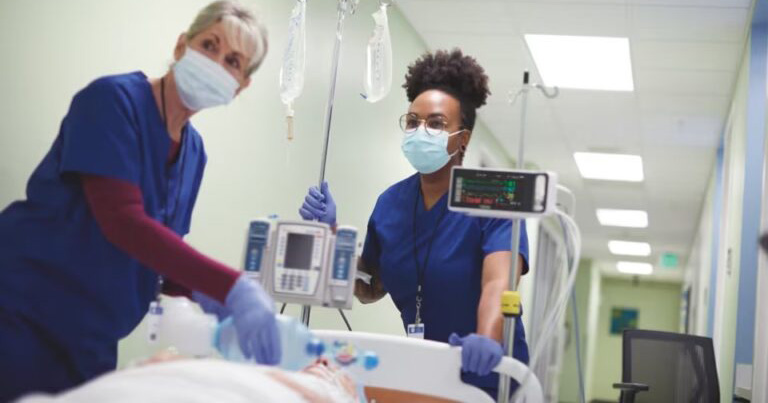
If you or a loved one have ever been hospitalized, you may have heard the term “ICU” thrown around. But what exactly is an ICU? Here you wil…
Scores pain from behavior in ICU adults who cannot report it, with the Critical-Care Pain Observation Tool (CPOT) or the Behavioral Pain Scale (BPS).
| Tool | Range | Suggests pain | Where the cut-off comes from |
|---|---|---|---|
| CPOT | 0-8 | Above 2 | Detected self-reported pain during turning in intubated adults after cardiac surgery: sensitivity 86%, specificity 78% (Gélinas 2009) |
| BPS | 3-12 | Above 5 | The pain threshold in an ICU study of systematic pain and agitation assessment (Chanques 2006) |
Self-report is the reference standard whenever the patient can give it. Vital signs are not valid pain indicators on their own; the 2018 SCCM PADIS guideline treats them only as a cue to assess pain properly. A low score does not rule pain out: the CPOT was less sensitive at rest (47% and 63%) than during turning.
| Item | 0 | 1 | 2 |
|---|---|---|---|
| Facial expression | Relaxed | Tense: frowning, brow lowering, tightening around the eyes | Grimacing: as for 1, with eyelids squeezed shut |
| Body movements | Still, or normal position | Protective: slow, careful movements; touching or rubbing the painful site | Restless: pulling at tubes, trying to sit up or climb out, thrashing |
| Muscle tension (passive arm flexion and extension) | Relaxed | Tense or rigid: resists | Very tense or rigid: strong resistance, cannot be completed |
| Ventilator compliance (intubated) | Tolerating | Coughing but tolerating | Fighting the ventilator |
| or Vocalization (not intubated) | Normal talking, or no sound | Sighing or moaning | Crying out or sobbing |
| Item | 1 | 2 | 3 | 4 |
|---|---|---|---|---|
| Facial expression | Relaxed | Partly tightened (brow lowering) | Fully tightened (eyelids closing) | Grimacing |
| Upper limbs | No movement | Partly bent | Fully bent, with finger flexion | Permanently retracted |
| Compliance with ventilation | Tolerating movement | Coughing, tolerating most of the time | Fighting the ventilator | Unable to control ventilation |
The CPOT is © Céline Gélinas; the item wording here is a short paraphrase of both tools. A version of the BPS for patients who are not intubated (BPS-NI) replaces ventilator compliance with vocalization; it is not included in this calculator.
The CPOT was validated in 105 cardiac surgery ICU patients assessed while unconscious and intubated, conscious and intubated, and after extubation: scores rose during turning and were associated with self-reported pain. The BPS was developed in 30 ventilated trauma and surgical ICU patients, whose scores were higher during painful procedures than during non-painful care (4.9 vs 3.5). In a head-to-head comparison in a medical ICU, both had good inter-rater reliability (weighted kappa 0.81). The 2018 SCCM PADIS guideline names the BPS, the BPS-NI and the CPOT as the behavioral scales with the greatest validity and reliability.
If you or a loved one have ever been hospitalized, you may have heard the term “ICU” thrown around. But what exactly is an ICU? Here you wil…
You just received a call from the hospital that your loved one is admitted to ICU. This sounds scary. You already know what is ICU, but you…