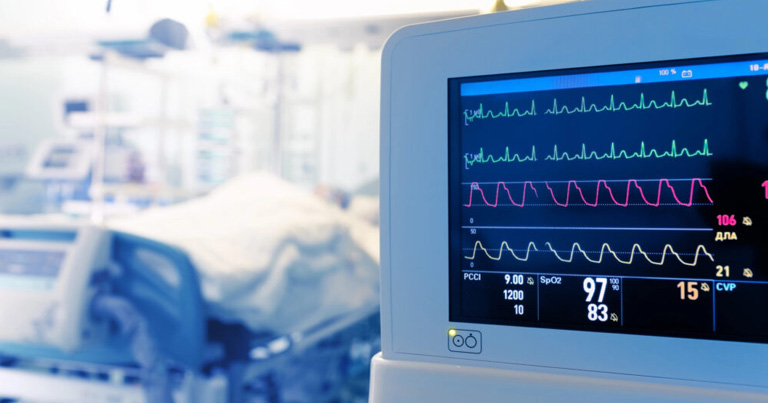
What is ICU?
If you or a loved one have ever been hospitalized, you may have heard the term “ICU” thrown around. But what exactly is an ICU? Here you wil…
Converts an infusion dose into a pump rate in mL/h, or a running rate back into the dose, from the drug amount and the bag volume. It does the arithmetic only, with no drug presets.
| Shown | Meaning |
|---|---|
| Infusion rate (mL/h) | The pump setting for the dose entered |
| Dose | The dose a running rate delivers, in the unit chosen |
| Concentration | The bag's drug per mL, in the dose's unit and in the bag's unit |
| Total per hour | The amount per hour for a weight-based or per-minute dose |
Doses in units (heparin, insulin, vasopressin) need the bag amount in units; doses by mass need g, mg or mcg. Results are rounded to about three significant figures. Check them against the pump's drug library and your institution's standard concentrations.
Concentration (per mL) = drug amount ÷ bag volume (mL)
Rate (mL/h) = dose × weight (if per kg) × 60 (if per minute) ÷ concentration
Dose = rate (mL/h) × concentration ÷ weight (if per kg) ÷ 60 (if per minute)
Amounts are converted first: 1 g = 1,000 mg = 1,000,000 mcg, 1 mcg = 1,000 ng, and 1 unit = 1,000 milliunits. Weight in pounds is converted to kg (1 lb = 0.4536 kg).
This is unit arithmetic, checked in both directions for every dose unit: for example, 0.1 mcg/kg/min for an 80 kg patient from 4 mg in 250 mL (16 mcg/mL) is 30 mL/h. It does not judge whether a dose is right for a drug, and it does not allow for the volume of the drug added to the bag or for line dead space.
If you or a loved one have ever been hospitalized, you may have heard the term “ICU” thrown around. But what exactly is an ICU? Here you wil…
You just received a call from the hospital that your loved one is admitted to ICU. This sounds scary. You already know what is ICU, but you…