
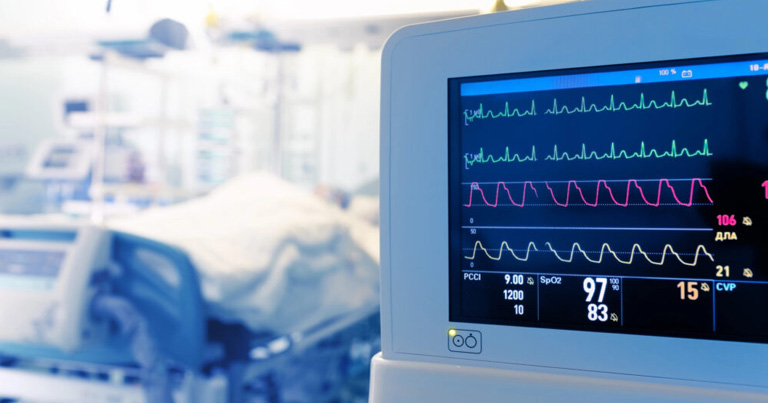
What is ICU?
If you or a loved one have ever been hospitalized, you may have heard the term “ICU” thrown around. But what exactly is an ICU? Here you wil…
Estimates creatinine clearance from age, weight, sex and serum creatinine with the Cockcroft-Gault equation, for drug dosing in adults with stable kidney function.
| Weight used | Least biased in (Winter 2012) |
|---|---|
| Actual body weight | Underweight patients |
| Ideal body weight | Normal-weight patients |
| Adjusted body weight (factor 0.4) | Overweight, obese and morbidly obese patients |
The result is in mL/min, not indexed to body surface area, and the dose thresholds come from each drug's label. The equation needs a stable creatinine and is unreliable in acute kidney injury. In augmented renal clearance it underestimates the measured clearance, and a measured creatinine clearance is the better guide to dosing. Rounding a low creatinine up to 0.8 or 1.0 mg/dL did not improve accuracy.
CrCl (mL/min) = (140 − age) × weight (kg) ÷ (72 × creatinine in mg/dL)
Women: CrCl × 0.85
Ideal body weight (kg) = 50 (men) or 45.5 (women) + 0.91 × (height in cm − 152.4)
Adjusted body weight (kg) = ideal + 0.4 × (actual − ideal)
Creatinine in µmol/L is divided by 88.4. Ideal body weight uses the ARDSNet predicted body weight formula, so it needs height. The result shows which weight was used, and with height entered it also shows the clearance with all three weights and the BMI.
Cockcroft and Gault built the equation from 24-hour creatinine excretion in 249 patients aged 18 to 92 and tested it against the mean of two 24-hour clearances in 236 patients (r = 0.83); the formula was for men, with 15% less for women. In 3,678 patients with stable kidney function and a 24-hour urine collection, Winter and colleagues found actual weight unbiased in underweight patients, ideal weight unbiased at normal weight, and adjusted weight the least biased and most accurate in overweight and obese patients. In 30 ICU patients with early AKI after cardiac surgery, the estimate erred by about 68% against measured GFR, and in 86 patients with augmented renal clearance it underestimated the measured clearance (median 135 against 162 mL/min/1.73 m2).
If you or a loved one have ever been hospitalized, you may have heard the term “ICU” thrown around. But what exactly is an ICU? Here you wil…