
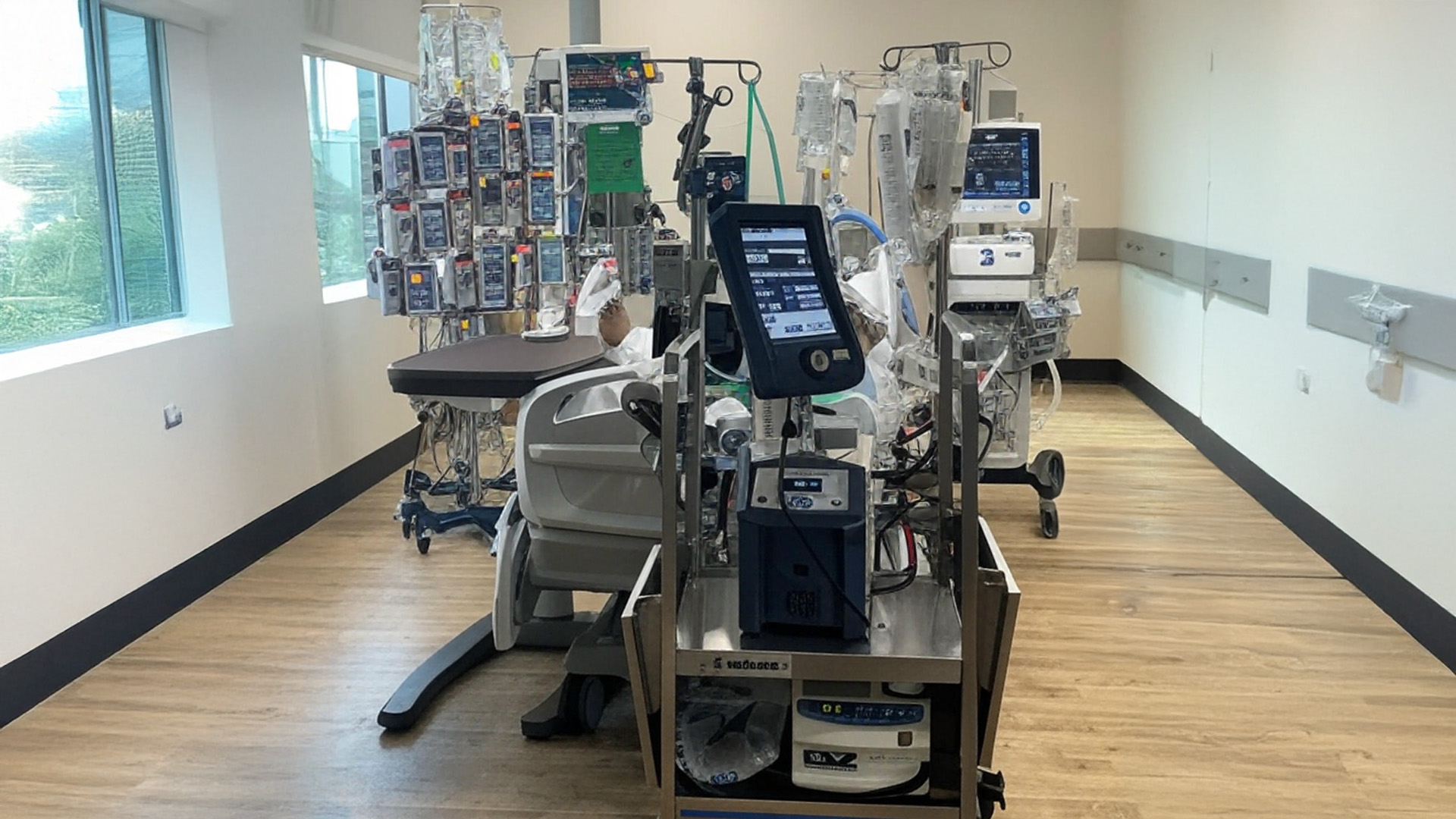
Prophylactic Antibiotic Use in Adult Cardiac Arrest Patients Receiving Emergent ECMO (eCPR)
Introduction Extracorporeal Membrane Oxygenation (ECMO) is an advanced life support therapy utilized in critical care medicine to provide te…
Checks an adult in refractory cardiac arrest against the ELSO 2021 example criteria for extracorporeal CPR (ECPR) and the entry criteria of the three randomized ECPR trials, side by side. Below 30 °C a different pathway applies: see the HOPE score.
Patient and arrest
Times
During CPR, if known
| Mark | Meaning |
|---|---|
| ✓ Met | The entry fits the criterion. |
| ✗ Not met | The entry falls outside the criterion. |
| ! Confirm | Something the fields cannot settle: logistics (transport time, device fit, team and bed), 5 min of advanced life support by the EMS team (Prague), or the ELSO 60-minute limit when favorable features are present. |
| ? Incomplete | A value the set needs is blank: EtCO2 for ELSO, or the number of shocks or the stop-rule values for ARREST. |
| · Not applicable | The three trials enrolled only out-of-hospital arrests, so they do not apply to an in-hospital arrest. |
The headline counts the criteria sets that are met, including those with items still to confirm, out of the sets that apply; for an in-hospital arrest only ELSO applies. ELSO presents its list as an example and recommends criteria agreed locally; the trial lists defined who could be enrolled, not who should receive ECPR. Criteria are a decision aid, and programs set their own.
| ELSO 2021 | ARREST | Prague OHCA | INCEPTION | |
|---|---|---|---|---|
| Setting | In or out of hospital | Out of hospital | Out of hospital | Out of hospital |
| Age | Under 70 | 18-75 | 18-65 | 18-70 |
| Witnessed | Yes | Not required | Yes | Yes |
| Early CPR | No-flow under 5 min (as with bystander CPR) | Not required | Not required | Bystander CPR |
| Initial rhythm | VF, pulseless VT or PEA | VF or pulseless VT | Any | VF or pulseless VT (or an AED shock) |
| Refractory | Consider ECPR after 10-15 min of failed conventional CPR; starting cannulation after 10-20 min is reasonable | No sustained ROSC after 3 shocks | At least 5 min of EMS advanced life support without sustained ROSC | No sustained ROSC within 15 min of CPR |
| Time limit | ECMO flow within 60 min of collapse, unless favorable features (intermittent ROSC, hypothermia before the arrest, young age, signs of life) | Transfer from the scene under 30 min | Cath lab arrival within 60 min of collapse (or of the call) | Cannulation starting within 60 min of the arrest |
| Physiology | EtCO2 above 10 mmHg (1.3 kPa) during CPR | No ECMO in the cath lab if 2 or more of: EtCO2 below 10 mmHg, PaO2 below 50 mmHg (or SaO2 below 85%), lactate above 18 mmol/L | No signs of death or irreversible organ damage on arrival | Not specified |
| Cause | Not a criterion | Not trauma, burns, drowning, electrocution or known overdose | Presumed cardiac | No multiple trauma (ISS above 15) |
| Exclusions | Known life-limiting comorbidity (such as end-stage heart failure, COPD, end-stage kidney disease, liver failure or terminal illness); ECPR outside the goals of care; aortic regurgitation more than mild | DNR order; severe illness that drastically shortens life expectancy (such as terminal cancer); pregnancy; nursing home residence; active GI or internal bleeding; no LUCAS fit or cath lab | DNR or other limits on treatment; severe chronic organ dysfunction; pregnancy; bleeding disorder; acute stroke or intracranial bleeding; pre-arrest CPC 3 or worse; inadequate femoral access; no ECPR team or ICU bed | Heart failure NYHA III-IV; COPD GOLD III-IV; disseminated cancer; advance directive; pregnancy; pre-arrest CPC 3-4; bilateral femoral bypass grafts |
ELSO also lists intermittent ROSC or recurrent VF and signs of life during CPR as favorable features. For the 60-minute exception, the tool counts a recorded core temperature below 35 °C as hypothermia; ELSO gives no cut-off for young age, so that is a tick. Each comorbidity is worded as its own set words it, so a tick excludes only that set. Trial criteria come from the published trials, their protocols and their ClinicalTrials.gov records (NCT03880565, NCT01511666, NCT03101787).
ARREST, a single-center trial in Minneapolis, stopped after 30 patients: 43% survived to discharge with early ECMO against 7% with standard ACLS. Prague OHCA (256 patients) found 31.5% against 22.0% survival with a good neurological outcome at 180 days (P = .09); it stopped for futility and may have been underpowered. INCEPTION (134 patients analyzed, 10 Dutch centers) found 20% against 16% at 30 days (P = .52). The 2025 AHA guidelines name no specific selection criteria: it is reasonable for centers with ECPR programs to develop and regularly reassess their own (Class 2a, LOE C-LD), and rapid intra-arrest transport for ECPR may be considered for limited, highly selected adults with out-of-hospital arrest (Class 2b, LOE B-R). Below 30 °C, ELSO 2025 says criteria built for normothermic arrest should not be used.
Introduction Extracorporeal Membrane Oxygenation (ECMO) is an advanced life support therapy utilized in critical care medicine to provide te…
ABSTRACT Patients who are comatose after cardiac arrest continue to be a challenge, with high mortality. Although there is an American College of Cardiology Foundation/American Heart Association Class I recommendation for performi…
System Support Mode Condition Application ECMO VA ECMO Cardiac failure Cardiac ECMO, ECPR, EISOR VVA ECMO Cardiorespiratory failure Cardiac and respiratory ECMO VV ECMO Respiratory failure Respiratory ECMO VP ECMO RV/respiratory f…